

Here are a few of my own internal guidelines that have served me well over the years. Could be that they’ll help you too.
Look around without your camera
I should add “if time and light allows.”
I’ve found some of my favorite shots by simply getting out of the car and wandering around without a camera. I can cover more ground and my mind seems a little freer. Once I find something I like, I go back and get my gear. I do have to admit that doing this has caused me to possibly miss “the moment” on occasion by having to take the time to retrieve my gear. But overall, this tip works well.
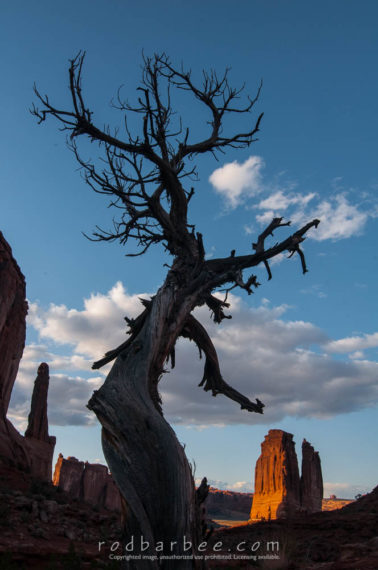 Find your shot with a handheld camera

If you walk around with the camera on the tripod, you’ll end up trying to match your composition to the tripod. It should be the other way around.
While hand holding a camera, you can quickly check out different perspectives. You can get lower, you can get closer to a foreground, you can easily place the camera anywhere you can reach. If the camera is already on a tripod, your tendency may be to just shoot from the existing height. By first finding your composition hand-held, you’ll give yourself the opportunity of finding a more interesting or expressive photo.
Once you find your spot, match the tripod to the composition.
Caution, this may put you in the market for a new tripod.
Relax and have patience
Get comfortable with where you are. You’ll see more, you’ll be more open to new ideas, and you won’t be stressed. And if it’s just “not working,” then just enjoy the view. Sooner or later, your inspiration will come.
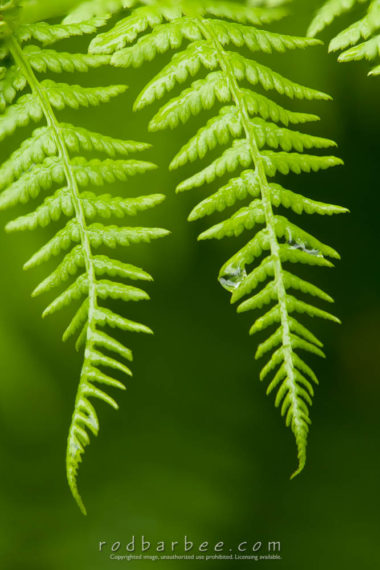 Figure out what you like

What, specifically, is it that drew your attention to a scene or subject? Figure this out and then photograph that. My friend David Middleton calls it “photographing a phrase.”
This has gotten me unstuck hundreds of times. I find a scene and I know I like it, but I just can’t come up with a satisfying composition. Then I slow down, relax, and ask myself what it is I really liked about the scene. I try to get it into as few words as possible. This little exercise usually results in one of those “Aha!” moments of recognition when I finally discover/remember what drew me to a scene or subject in the first place.
This takes some practice.
 Simplify

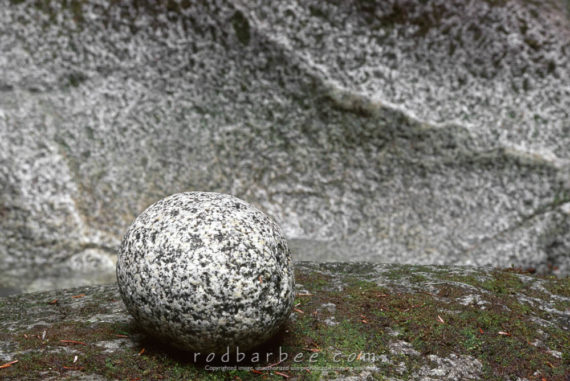
This comes from identifying what you like and photographing only that. Simplifying your composition will make it stronger, will show your viewers exactly what you liked. If you need to describe your photograph using more than one “and,” you need to simplify.
Make connections
Connect your foreground to your background. Connect one thing to another. You can do this by looking for lines and curves that lead through a scene. These can be literal, like a path or a stream, or implied, like stepping stones.

Try something new
Try putting your main subject on the edge of the frame, for instance. Or making it smaller in a grand landscape. Break away from the “rule of thirds.”

Rules Schmules
Try breaking the traditional rules of composition. Put things in the middle, make things unbalanced, tilt your horizon. If what you try doesn’t work, the “delete” button always does
Go with your gut
 Subject placement takes up whole chapters in books about composition. I just simplify it: If it feels good, take it.
And if it feels awkward, fix it. If you feel something’s wrong with the picture, chances are there is, even if you’re the only one seeing it. And since you’re the one who must live with it, you should like it, right? So go with what feels good.
And that’s probably the most important “rule.” Go with what feels right and please yourself, this is supposed to be fun after all.






Excellent information Rod. Many of these have worked for me. Thank you.
Shirley and I travel to Seattle to visit our son and his family often. Did our second Palouse this fall. Remember the ‘wheel’ fence.