|
|
|
|
Greetings,
Ok, this is a long one. I've got several stories from this year's Yellowknife trip and some workshops/tours information, followed by just being goofy.
Let's get to it!
|
|
Yellowknife report
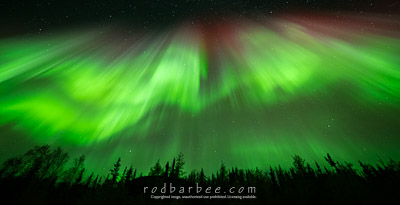
I recently returned from two successful aurora tours to Yellowknife with my friend and co-leader John Barclay.
The fall color in the area was fantastic for both tours and each group got at least three good nights of auroras. We were stymied by rain or clouds a few times, but that’s why I plan these tours with the potential of six nights out each. (Though I must say, after three nights in a row of getting back to the hotel at 3 or so in the morning and not getting a lot of sleep, folks are grateful for a night off due to rain.)
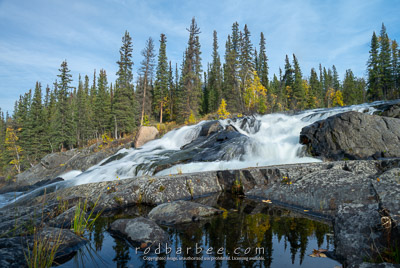
We were also contending with occasional smoke, mostly during the day, from wildfires in the region. Smoke didn’t seem to affect our aurora shoots.
This year we had some interesting conditions, like occasional mist hovering over ponds and lakes, which made the aurora scene even more ethereal than usual.
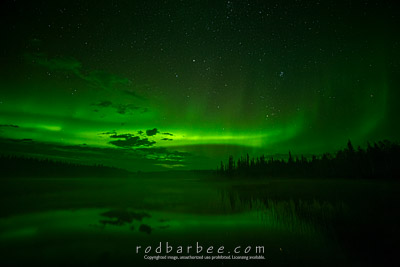
On these tours, more than on previous tours, folks were using their iPhones alongside their regular cameras to photograph the auroras. One person shot exclusively with the iPhone and produced amazing stills and video!
Others were using their phones for time-lapse. I even tried a few (iPhone 16 Pro Max). The thing about the iPhone is that you can easily produce a 20 second time-lapse movie by recording for only 15-20 minutes. Whereas with a DSLR or mirrorless camera you need about an hour’s worth of images to put together a 10 second clip.
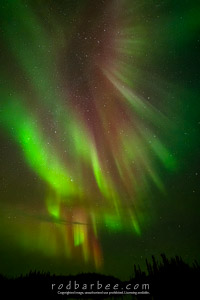 What’s the trade-off? Quality and control. With the phone, you need brighter auroras to produce decent quality time-lapse video: dim auroras produced very noisy time-lapse movies. With a regular camera, longer shutter speeds are possible, therefore better exposures. What’s the trade-off? Quality and control. With the phone, you need brighter auroras to produce decent quality time-lapse video: dim auroras produced very noisy time-lapse movies. With a regular camera, longer shutter speeds are possible, therefore better exposures.
But with the iPhone you can get a decently long clip with minimal effort and minimal time. So how do you keep your phone steady during video, time-lapse, or still capture? Glad you asked. I used tripod a mount adapter made by Neewer that fits my ballhead’s quick release.
Others were using a mount made by Smallrig that fits into the camera’s hot shoe.
Both mounts work great. The advantage of the hot shoe mounted option is that you can still use your regular camera to capture stills.
|
|
Getting bogged down
During our second Yellowknife tour, we were photographing fall color near a lake. One of the participants (to protect the innocent, I’ll call him “John”) went down towards the shore of the lake. Near the shoreline, he stepped into some mud and sunk down to his knee. It was the kind of mud that doesn’t want to let go.
Well, I was with another part of our group that was photographing from above the lake, and we could see that he was stuck and that others were trying to help. So I, being the helpful sort, thought I could approach him from the lakeshore and lend a hand. As you can see, this lake had a definite shore, right? Right?
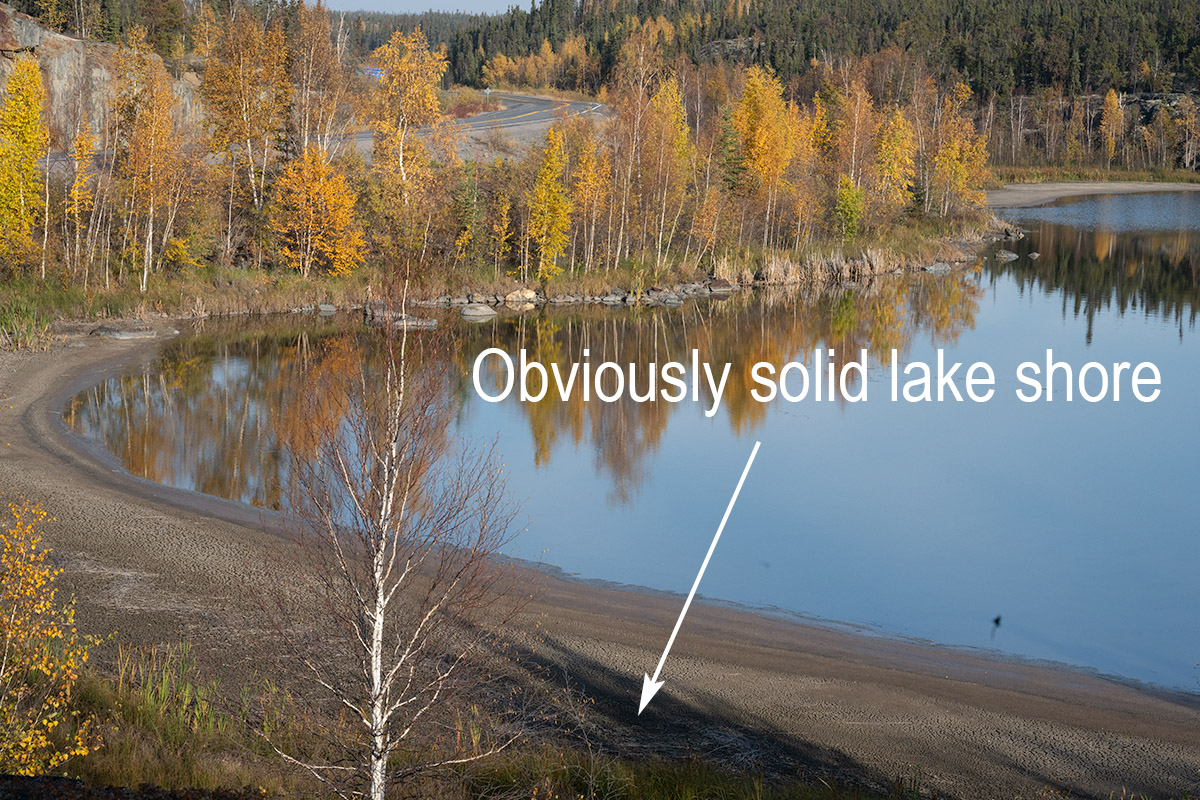
So I head down toward the shoreline. It was a little squishy as I approached the edge of the very solid looking shore, but I was able to get to it by just walking on the tufts of grass. And then, without much thought, I stepped out onto the shore. And promptly sank up to my waist. Yep, not that much thought to it.
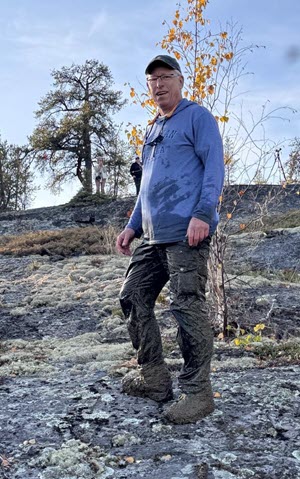 I was still right next to the grasses and other solidly rooted things, so I was able to start pulling myself out. But Holy Moly it was hard. I just needed to get a knee up to get some leverage on some roots, but I could barely move my leg up. I was still right next to the grasses and other solidly rooted things, so I was able to start pulling myself out. But Holy Moly it was hard. I just needed to get a knee up to get some leverage on some roots, but I could barely move my leg up.
Fortunately, some of our quicker thinking (quicker than me, at least) participants found a sturdy stick and made their way down to me and we were able to pull just enough for me to get my knee up and push myself the rest of the way.
A big thanks to Harper and Li for rescuing me! I was just grateful that the bog wasn’t deeper than it was; that could have been scary.
“John” was also able to get out with the help of few good-sized sticks that others brought to him. He was able to lay them across tufts of grass and use them as leverage to get himself out.
All in all, no harm done (except to dignity); I and the group that was around me had a good laugh at my expense.
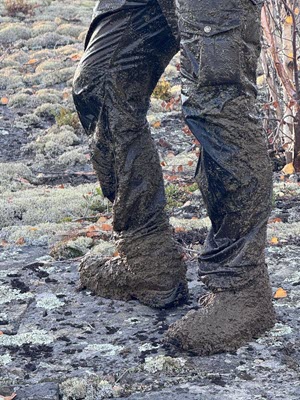 Since my pants were soaked, it was suggested that I take them off for the drive back. I didn’t fall for that, having already jumped into one embarrassing situation. Since my pants were soaked, it was suggested that I take them off for the drive back. I didn’t fall for that, having already jumped into one embarrassing situation.
Instead, I used a bunch of paper towels and wiped off as much of the muck as I could. Then used a couple of pack towels to cover the seat for the drive back.
After returning to my room, I went directly to the shower to take off my boots and rinse them and my pants off. Then my pants and shirts went into the washer (I had a washer and dryer in my room). A couple of days later my boots were all dried out, and it was as if it had never happened at all. Now if it wasn’t for the dreams…
|
|
I learned new things!
During the Yellowknife tours I learned a few things. From a couple of participants on the first tour, one of whom has a Masters degree in astronomy, I learned more about how to better use the various aurora and night sky apps.
From someone else I learned about DXO PureRaw, which in some respects is even better than Topaz or Lightroom/ACR noise reduction.
And I learned about Pixel Mapping.
For the first week in Yellowknife photographing auroras, I noticed a lot of hot pixels in the dark areas of high ISO images. And when I say a lot, I mean it looked like a field of stars where tree silhouettes should be. I found some information on the internet about how to quickly get rid of them by using the Dust and Scratch filter in Photoshop.
Then, after downloading and testing DXO PureRaw, I saw that PureRaw by itself eliminated nearly all hot pixels.
During the next tour, one of the participants told me about pixel mapping in our Nikon Z8 cameras. From the web: ‘In Nikon cameras, pixel mapping is a sensor calibration process to address "hot" or "dead" pixels, which appear as bright spots in images.’
After performing the Pixel Mapping I noticed a dramatic reduction of hot pixels in dark areas of high ISO images. If you have a Nikon camera, here’s a Nikon page about using Pixel Mapping.
If you don’t have a Nikon camera, be sure to ask Mr. Google.
So now I have several tools available to me to take care of hot pixels both before and after they happen!
|
|
Yellowknife 2026
Are you interested in filling that bucket list and joining me in Yellowknife to experience and photograph the auroras?
Right now, my Sept. 14-21, 2026 tour is sold out. I’ve made hotel arrangements for a Sept. 7-14, 2026 tour that is tentative and may be in cooperation with NANPA (North American Nature Photographers Association).
If you’re interested in being on the waiting list for the Sept. 14-21 tour or receiving notice on a possible second tour (Sept. 7-14), just reply to this email and let me know.
I should have the Yellowknife page up soon so you can read more about the details of the trip. Keep checking my workshops site.
|
|
Wild Alaska
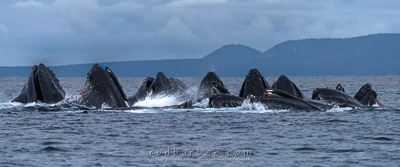
Can you imagine what it’s like to be on the water when a pod (or herd) of giant Humpback whales rise as one to feast on herring? I can tell you that it’s the most exhilarating wildlife photography I’ve ever done.
This March 18-22 I’ll be heading back to Sitka for three full days on the water photographing whales, bald eagles, fishing boats, amazing scenery and more.
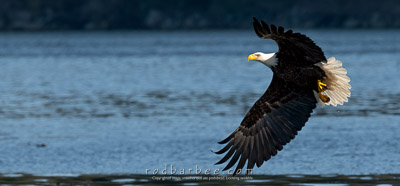
We’ll be spending most of our time on the boat but there are on shore opportunities too like the harbors, the historic St. Michael’s Orthodox Cathedral, Sitka National Historic Park (Totem Park), and more.
For more information and to sign up, visit my Sitka Whales page.
|
|
Olympic National Park workshop filling up
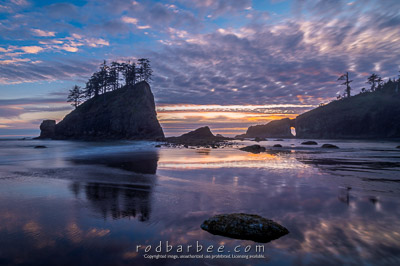
Next year I’ll be co-leading this workshop with Margo Pinkerton of Barefoot Contessa Photo Adventures.
Olympic is a place I know well, having spent a lot of time in the backcountry backpacking and even more time photographing the streams, waterfalls, forests, mountains, and beaches. I’ve led or co-led over 20 workshops to Olympic and it’s one of my favorite places. (Having it practically in my backyard doesn’t hurt.)
On this workshop we’ll be visiting the beaches, Sol Duc Falls, Ancient Groves, the Hoh, Lake Crescent, and more. We'll also have classroom time for critiques, inspiration, and processing tips.
And in this workshop, you’ll have two instructors to learn from. Margo has been leading tours and workshops for several…let’s just say a long, long time…and has garnered a loyal following. She’s known for inspiring creativity and helping photographers to seek their own vision.
Interested? More details can be found on my Olympic page.There are still a few spots left!
|
|
Bandon on the Oregon Coast
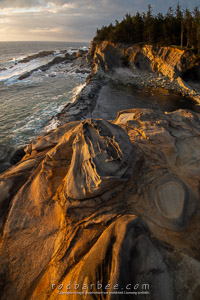 Following Olympic, Margo and I will be traveling to Bandon, OR for another workshop to photograph the iconic sea stacks as well as lighthouses, crashing waves, and the gardens of Shore Acres. Following Olympic, Margo and I will be traveling to Bandon, OR for another workshop to photograph the iconic sea stacks as well as lighthouses, crashing waves, and the gardens of Shore Acres.
More information on my Bandon page.
|
|
Steptoe Butte road to reopen
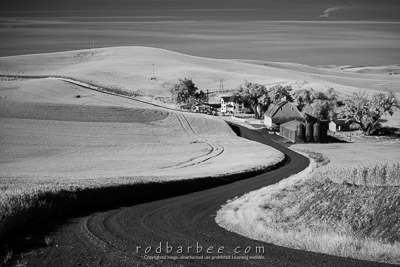
According to Washington State Parks, the Steptoe Butte road improvement project is anticipated to be completed by the end of October (this month!).
That means it should be open by the time next spring comes around and Palouse workshops, including my own, can visit the butte again.
The Palouse is one of my all-time favorite photo regions. That’s why I keep going back and why I’ve been leading workshops there for more than 20 years. (I’m getting old!)
If you’ve never been, and it’s on your bucket list, why not sign up? If you’ve been before, you know how much there is to see and photograph. So why not treat yourself and go again?
I still have space available and the workshop is limited to only 7. For more, visit my Palouse page.
|
|
Lofoten, Faroes, Iceland
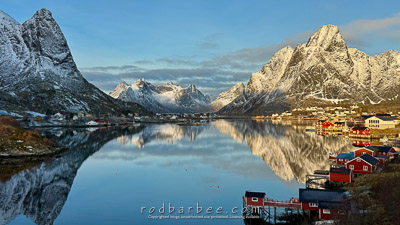
I’m in the process of setting up tours to these northern European islands for 2027.
So far, I’ve secured dates for:
Lofoten Islands: Jan. 29 – Feb. 5, 2027
Faroe Islands: October 1 – 8, 2027
And I’m looking at Iceland in the winter for late 2026 or late 2027.
Let me know if you’re interested in any of these and I’ll keep you updated when they’re open for registration.
|
|
Just for fun
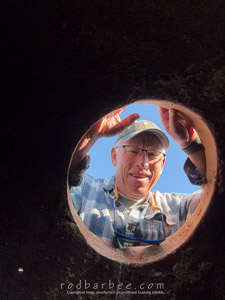 During the Yellowknife tours we visited an outdoor mining museum (mining is big in Yellowknife – mostly gold and diamonds). It’s a place with old mining equipment on display, most of which are accompanied by informational plaques. Quite an interesting place. During the Yellowknife tours we visited an outdoor mining museum (mining is big in Yellowknife – mostly gold and diamonds). It’s a place with old mining equipment on display, most of which are accompanied by informational plaques. Quite an interesting place.
There’s one piece of equipment that looks like a cement mixer, so I put my iPhone in it and triggered the camera from my watch. To quote a friend of mine: “hours and hours of mindless entertainment.”
I think I have a new Instagram avatar!
|
|
|
|
|
|
|
|
|